
A 50/50 split sounds fair. But sometimes, splitting the difference just creates two losers instead of one.
We are taught from an early age that fairness means equal. Split the last piece of cake in half. Take turns. Meet in the middle. It is a tidy, intuitive rule, and in many situations, it works perfectly well.
But in conflict resolution, the instinct to split the difference can be one of the most expensive mistakes you make. Because what looks like fairness on the surface can mask a much smarter solution hiding just underneath, one that requires only a slightly different question to uncover.
The story of the orange
In Getting to Yes, Roger Fisher and William Ury share a now-famous illustration. Two people are arguing over a single orange. Both want it. The obvious solution is to cut it in half and give each person an equal share.
But ask why each person wants the orange, and a different picture emerges entirely. One wants the fruit to eat. The other wants only the peel to use in baking. A 50/50 split gives both parties half of what they want. Understanding their underlying interests gives both parties everything they need.
This is the distinction between positions and interests, and it is one of the most important concepts in negotiation and mediation.
Positions are what we say we want: the stated demand, the number on the table, the thing we argue about. Interests are why we really want it: the underlying need, concern, or motivation driving the position.
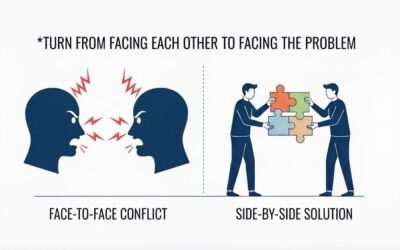
Most disputes are fought at the level of positions. Each party states what they want, digs in, and defends that position against the other. The negotiation becomes a tug of war over a fixed object, and any movement feels like a loss. The smarter approach is to look past the position and ask: what is actually driving this? What does each party truly need?
A lesson as old as King Solomon
This wisdom is not new. It appears in one of history’s most celebrated judgments: the story of King Solomon and the two mothers who both claimed the same child.
Solomon’s proposed solution, to divide the child in two and give each woman half, was never intended to be carried out. It was designed to reveal the true interests of each claimant. One woman accepted the proposal. The other begged Solomon to give the child to her rival rather than see him harmed. That response exposed everything. It revealed not just who the real mother was, but what each woman truly cared about.
Solomon did not split the difference. He understood that a fair outcome is not always an equal one, and that the right resolution requires understanding what is really at stake for each party.
How this plays out in mediation
In mediation, we do the same thing, with words rather than swords. A skilled mediator moves past the stated positions to explore the interests underneath. What does each party actually need from this resolution?
When those interests are surfaced and understood, creative solutions become visible that positional bargaining would never have found. Solutions that give both parties more than a compromise. Solutions that actually work.
There does not need to be a winner and a loser. There only needs to be a solution, and it starts with asking the right question.
Stuck in a dispute where a 50/50 split feels like a loss? We help businesses and individuals find creative, interest-based solutions to commercial disputes through mediation and negotiation. Get in touch and let’s look for a better outcome together.
This article is for information purposes only and does not constitute legal advice.


0 Comments