


“When both sides are truly heard, resolution can be built.”
In her widely celebrated TED talk, author Chimamanda Ngozi Adichie warns of the danger of a single story. Her argument is simple but profound: when we hear only one version of events, one perspective, one narrative, we lose something essential. We lose the complexity, the context, and the humanity that make a full picture possible.
It is a lesson that cuts to the heart of how disputes are resolved, and how often they are not.
A principle as old as law itself
The Latin principle audi alteram partem, “let the other side be heard,” is one of the oldest and most fundamental rules in law. It underpins natural justice. It is the reason accused persons have the right to respond to charges brought against them. It is woven into the fabric of every fair legal process.
And yet, in practice, how often are both sides truly heard?
Litigation, for all its procedural rigour, is a remarkably narrow space for storytelling. Evidence is filtered. Testimony is shaped to support legal arguments. What is admissible, relevant, or strategically useful determines what gets said, and what does not. The human context that so often sits at the root of a dispute, the misunderstanding, the unmet expectation, the intention that was never communicated, rarely makes it into the courtroom. It is trimmed away in service of the legal point.
The result is that parties can emerge from lengthy, expensive litigation still feeling fundamentally unheard. The legal outcome may have been determined, but the underlying conflict, the one that actually drove the dispute, remains unresolved.
Mediation as the truest expression of audi alteram partem
Mediation offers something different. It is the truest expression of the principle of letting the other side be heard.
In a mediation, each party is given the space to tell their full story, openly, honestly, and without the restrictions that govern courtroom testimony. There is no requirement to frame everything as evidence. There is no opposing counsel waiting to cross-examine. There is simply the opportunity to speak, and to be heard.
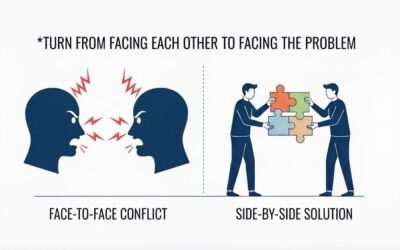
When people feel genuinely heard, something changes. The defensiveness that characterises so much of adversarial dispute resolution begins to soften. Parties move from defending fixed positions to exploring underlying interests. From arguing about what happened to understanding why it happened, and what both sides actually need going forward.
That is where resolution lives. Not in the victory of one narrative over another, but in the space created when both stories are acknowledged.
The practical case for mediation
Beyond its philosophical appeal, mediation makes compelling practical sense, particularly in commercial disputes where ongoing relationships, reputation, and resources are all at stake. It is significantly faster and less costly than litigation. Outcomes are agreed upon by both parties, not imposed by a court. It preserves commercial relationships that litigation typically destroys. And it addresses the human dimensions of a dispute, not just the legal ones.
The danger of a single story is that it flattens complexity and forecloses understanding. In conflict resolution, the antidote is the same as it has always been: let the other side be heard.
Considering mediation for a commercial dispute? We assist businesses and individuals in navigating disputes through mediation and negotiation, building resolution through understanding.
This article is for information purposes only and does not constitute legal advice.

0 Comments