
“Not because it is softer, but because it gives people back what litigation takes away from them, the ability to choose how their conflict ends.” Judge Srđan Šimac
There is a persistent misconception that mediation is the gentle option, the path chosen when parties are not serious enough, or strong enough, to go to court. It is a view that undersells mediation so dramatically that it borders on the opposite of the truth.
Mediation is not soft. It is powerful, and it is powerful precisely because of what it gives parties that litigation never can.
What litigation takes away
When a dispute goes to court, both parties surrender something significant: their agency. The outcome is handed to a judge. The process is governed by rules that exist independently of either party’s needs. The timeline is set by the court’s schedule. The solution, whatever it turns out to be, is imposed rather than chosen.
That is not inherently wrong. Sometimes it is exactly what a dispute requires. But it comes at a cost, not just financially, but in terms of autonomy, dignity, and the ability to shape your own resolution.
What mediation gives back
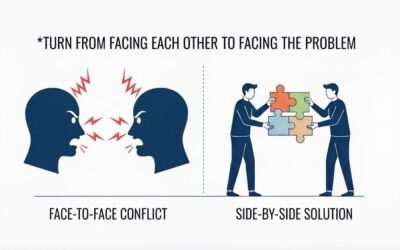
Mediation returns control to the parties. Both sides actively participate in designing the resolution. They are not passive subjects of a process. They are the architects of the outcome. That is not a small thing. It is one of the most meaningful distinctions between the two processes.
And because the parties shape the resolution themselves, mediation also unlocks something litigation structurally cannot: creative solutions. A court can only award what the law permits. A mediated agreement can include anything both parties consent to, flexible payment arrangements, ongoing business relationships, apologies, future commitments, structural changes. The range of possible outcomes is vastly broader, and far more likely to address what actually matters to each party.
Power, not softness
Choosing mediation is not a concession. It is a strategic decision to engage with your conflict on your own terms, to retain discretion over the outcome rather than outsourcing it to a court. It requires courage, honesty, and a willingness to engage directly with the other side. Those are not soft qualities.
The ability to choose how your conflict ends is not a consolation prize. It is the point. And that, as Judge Šimac so precisely put it, is exactly what mediation gives back.
Want to explore mediation for your dispute? We guide individuals and businesses through mediation with skill, care, and a commitment to outcomes that truly work.
This article is for information purposes only and does not constitute legal advice.


0 Comments