
Lack of education is one of the biggest barriers to accessing the power of ADR. I know, because I was one of the people who didn’t understand it.
When I started practising law, Alternative Dispute Resolution was barely on my radar. At university it was mentioned briefly, mostly in the context of family matters, and framed as something optional rather than a meaningful process in its own right. It certainly was not presented as something a serious litigator would choose.
So I became a litigation attorney who believed, genuinely, that court was the best route. When Rule 41A notices arrived, the rule that requires parties to consider mediation before proceeding, I filed objections routinely. My reasoning was simple and, I thought, logical: if the parties could have settled, they already would have. Mediation felt like a detour, not a destination.
What changed
It was only once I formally trained in ADR and truly understood the process that my perspective shifted, fundamentally and permanently.
What I had been objecting to was not mediation. It was a version of mediation I had constructed in my head, one based on assumption rather than understanding. The real process is something quite different. It is structured, skilled, and genuinely powerful. And what struck me most was this: it gives parties something that litigation almost never does. The opportunity to actively participate in resolving their own conflict.
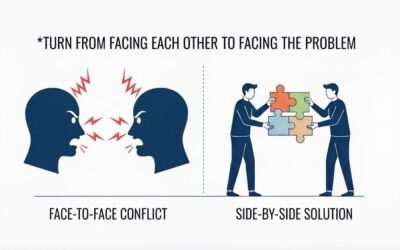
In court, a judge decides. In mediation, the parties decide. That shift in agency changes everything, the quality of the outcome, the durability of the resolution, and the way both parties feel when it is over.
Why ADR deserves more than a footnote
ADR is not just more efficient than litigation, though it usually is. It is not just cheaper, though it often is. It is more humane. It addresses conflict at a human level, not just a legal one. It creates space for the emotional and relational dimensions of a dispute to be acknowledged, the things that courts have neither the time nor the mandate to consider.
The outcomes it produces are more sustainable, not just financially, but emotionally and relationally. People who reach a mediated resolution tend to honour it, because they built it themselves.
The more we teach ADR, in law schools, in businesses, in communities, the more people can choose it with confidence. And the more people choose it, the more conflict gets resolved in a way that is truly meaningful rather than merely concluded.
Curious about whether mediation could work for your situation? We help individuals and businesses explore ADR as a faster, more humane alternative to litigation.
This article is for information purposes only and does not constitute legal advice.


0 Comments